

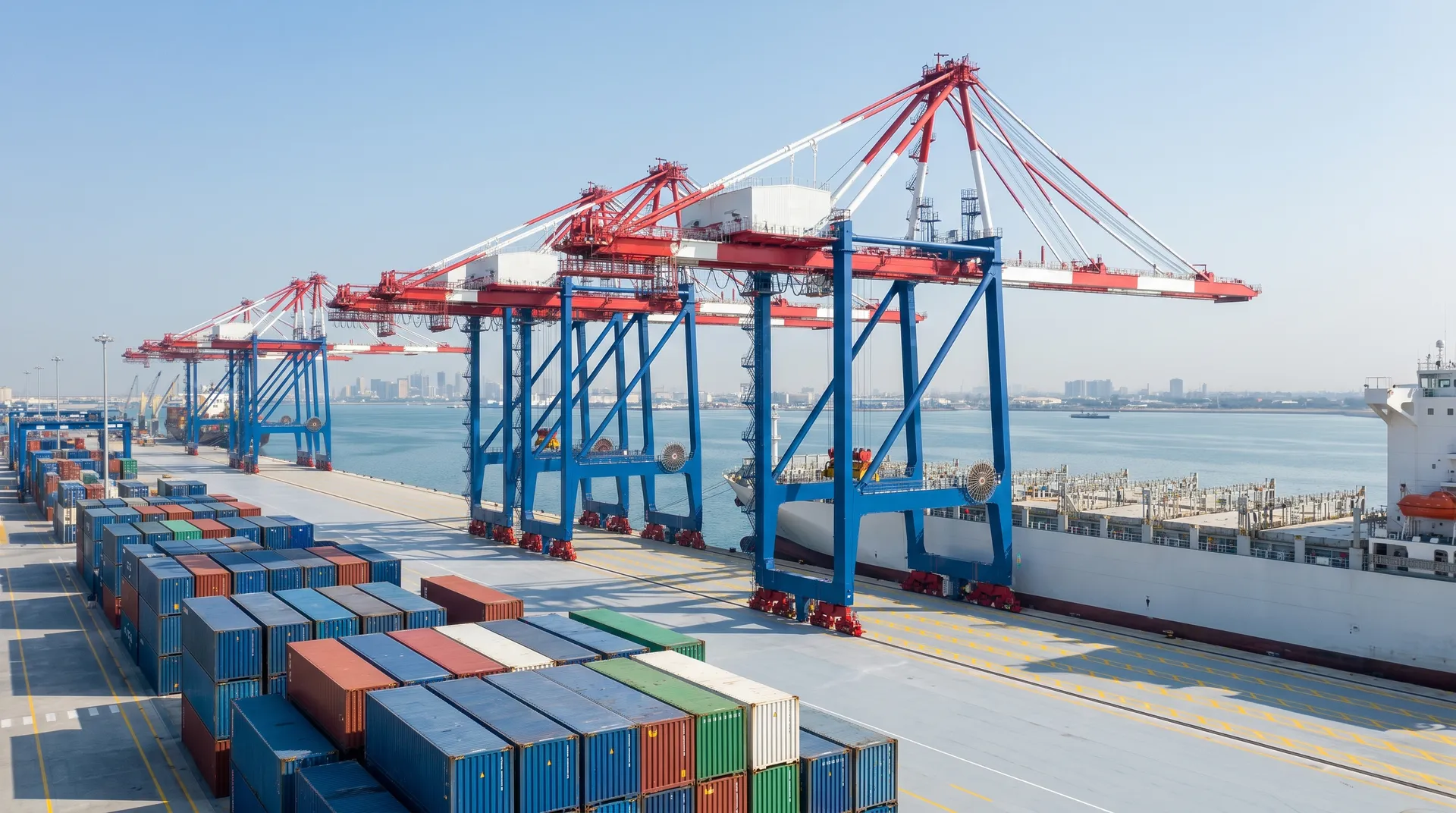
You operate a shipyard in Lévis, a Great Lakes terminal in Hamilton, or a fuel depot at the Port of Montréal. Salt air corrodes everything that's not stainless or FRP. Bunker fuel and diesel vapors trigger hazardous classifications around fueling docks. And every fixture has to survive a winter on the St. Lawrence. Here's what works.
What hazard you're dealing with
Two stacked problems. First, corrosion. Marine air is salt-saturated; standard powder-coated steel fails inside 18 months. Second, flammable cargoes. Bulk carriers move fuel oil, gasoline, ethanol, ammonia, sometimes LNG. The shore-side handling zones (loading arms, manifold areas, tank vents) are classified Class I Div 1 or 2 just like an oil terminal. Add Canadian winter and you need fixtures that start at –40 °C and survive ice impact.
How the code classifies typical zones
| Where | Classification | What you need |
|---|---|---|
| Tanker manifold area, fuel loading arms | Class I, Division 1, Group D | Explosion-proof marine, T3 |
| Within 3 ft of vent / hatch (fuel cargoes) | Class I, Division 2, Group D | Vapor-tight marine |
| Open dock / quay (general) | Outdoor wet, NEMA 4X | Marine LED area light |
| Drydock interior (during welding/cutting) | Hot work zone | Standard industrial; remove during fueling |
| Shipyard fabrication shop | Industrial, hot work areas | Heavy-duty LED |
| Bulk grain dock (Thunder Bay, Quebec City) | Class II, Division 2 (dust) | Dust-tight LED |
| Container terminal | Outdoor industrial | Heavy-duty floodlight |
Fuel-handling zones need genuine hazardous-area fixtures: see our Class I Division 1 fixtures for manifold and loading-arm areas, or Class I Division 2 fixtures for the wider vapor perimeter.
Transport Canada regulates marine safety on top of CEC Section 18 and provincial code; shore-side electrical installations at wharves, piers, and docking facilities also fall under CEC Section 78 (marinas, wharves, and docking facilities).
The lighting
- Fixture type: Marine-grade LED with 316 stainless or FRP body, never aluminum (pits in salt air) or steel (rusts). Hazardous zones use Class I Div 1 or Div 2 marine variants.
- T-code: T3 standard for fuel zones (hydrocarbons autoignite 200+ °C).
- IP rating: IP66 minimum, IP67 preferred; direct wave splash on dock fixtures is realistic.
- NEMA rating: NEMA 4X mandatory in salt-air environments.
- Operating temp: –40 °C to +55 °C. Quebec/Ontario winters need cold-rated drivers.
- Light level: 50–100 lux general dock; 200 lux working areas; 500 lux at vehicle traffic / loading equipment / inspection points; 1,000+ lux for security / surveillance zones.
- CRI: 70+ general; 80+ where cargo inspection happens.
- CCT: 5000 K daylight maximizes visibility in fog and night ops.
- Mounting: High-mast for open quay (60–100 ft pole), wall-pack on fabrication buildings.
Cables & accessories (yes, we supply these too)
Marine + shipyard installations need TECK90 with 316 stainless armor for splash zones, CSA C22.2 No. 174 glands rated for marine atmosphere (look for stainless body or PTFE-sealed). Hazardous zones use TECK90-HL or MC-HL with sealed glands. JBs must be 316 stainless or FRP; aluminum corrodes too fast. We supply fixtures, cable, glands, and corrosion-grade JBs as one package. Most marine contractors are general-trade and miss the salt-spray rating on accessories.
Quebec rule
Quebec marine corridor (Port of Montreal, Quebec City, Sept-Îles, Trois-Rivières) is regulated by Transport Canada for marine safety, RBQ for shore-side electrical installations, and CNESST for occupational safety. Bill 96 safety labeling applies. Hydro-Québec's Solutions efficaces program's Medium and Large Business component covers shore-side facility LED retrofits up to 75% of eligible costs (program terms as of September 2026).
Ontario rule
Ontario marine cluster (Hamilton, Oshawa, Thunder Bay, Toronto Marine, Sarnia chemical valley docks) is regulated by Transport Canada + ESA for shore-side electrical. ESA Bulletin 18-1-21 covers hazardous-zone classification. Save On Energy's Retrofit Program covers up to 50% of LED conversion costs at marine facilities.
Common questions
Do I need ABS or DNV listing for shoreside fixtures? No. Those marine classification societies cover shipboard equipment. Shoreside (dock, terminal, shipyard) installations follow CEC Section 18, Transport Canada regulations, and provincial code. ABS/DNV listings are needed for fixtures on vessels.
Do dock fixtures need a marine listing? Not in the sense of a formal marine classification-society approval; those (ABS, DNV, and similar) generally apply to equipment installed on vessels, not to shore-side dock and terminal fixtures. Shore-side lighting is instead expected to meet the applicable hazardous-area rating (Class I Division 1 or 2 where fuel is handled), a corrosion-resistant enclosure rating such as NEMA 4X for salt-air exposure, and Transport Canada plus provincial electrical code requirements. Confirm the exact combination your facility needs with your electrical authority, since it can vary by port and cargo type.
Why does aluminum body fail in marine air? Galvanic corrosion. Salt-saturated air with steel fasteners and aluminum housing creates a battery effect, and aluminum sacrifices itself. Stainless or FRP are the only durable options for direct-exposure marine.
My shipyard does welding / cutting in drydock. Hazardous classification? Hot work zones are time-limited classifications, not permanent. During fueling-related work, the area near fuel piping is Class I. During hot work with no fuel present, it's industrial. Lighting is sized for the most demanding spec the area sees.
Bulk grain dock: Class II Div 1 or Div 2? Loading and unloading creates dust clouds (Div 1 momentarily). Settled dust in storage areas is Div 2. Most operating areas are Div 2 with periodic Div 1 spikes, so most operators spec for Div 1 to simplify and pass inspection consistently. See our Grain Handling guide for the full Class II dust breakdown.
LED retrofit on marine facilities: payback? Strong. Marine facilities run 24/7 lighting at high connected loads. Combined energy + maintenance savings (no truck rolls onto exposed dock to swap a 1,000 W metal halide) typically pay back in 18–30 months.
Talk to a specialist
Shipyard or terminal retrofit? Send us your facility layout, fuel handling spec, and exposure conditions and we quote fixtures + 316 stainless TECK90 + marine-grade glands + FRP JBs as one package. Or browse marine-grade vapor-tight LED.
Sources: CEC Section 18, CEC Section 78 (marinas, wharves and docking facilities), NFPA 307 (marine terminals, piers, and wharves), RBQ Classification, ESA Bulletin 18-1-21, Hydro-Québec, Save On Energy.
Spec'ing a project? We quote the whole package: fixtures, cable, glands, sealing fittings. Same day.